



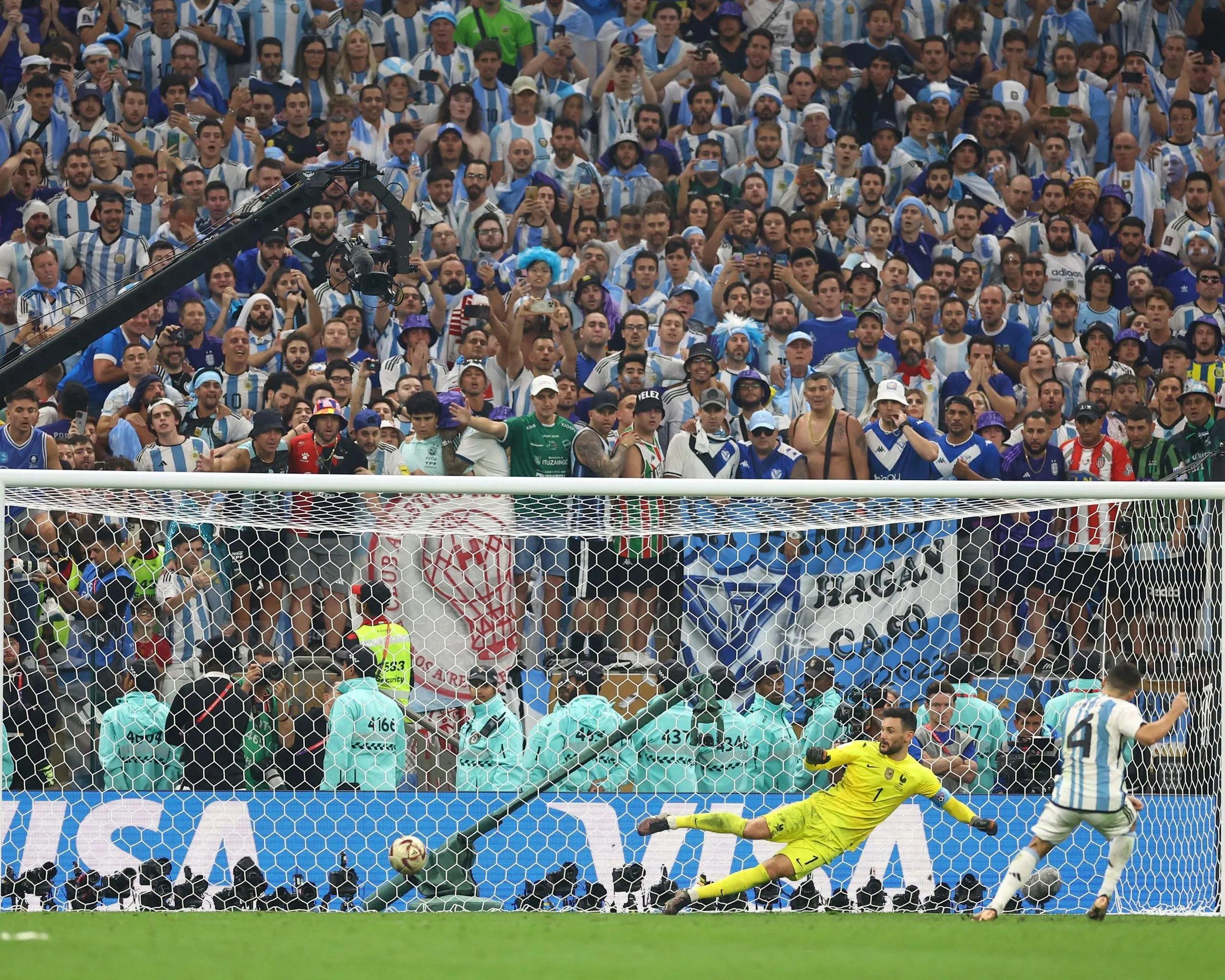
The thrilling conclusion of the 2022 World Cup final saw Argentina triumph over France in a dramatic penalty shootout, ending the match at 4-2 after both teams had scored three goals in regular play. The importance of penalty kicks in determining match outcomes is evident, making the exploration of effective strategies vital for teams aiming for success.
Understanding the nuances of penalty kicks, particularly during high-stakes competitions, can provide teams with a critical edge. What strategies can players adopt to enhance their chances of scoring from the spot?
Go First or Win the Toss
Securing the initial kick in a penalty shootout can significantly influence the outcome. Analysis of data from major tournaments, including the World Cup and European Championship, indicates that teams taking the first penalty emerge victorious approximately 60.5% of the time. Notably, a rule change post-2003 that allowed the winning team of the coin toss to choose whether to kick first or second highlighted that winning the toss itself is more advantageous. Teams that won the toss succeeded in about 60% of instances, compared to a 51% success rate for those who shot first.
The Significance of a Good Run-Up
A comprehensive study published in 2020, which analyzed over 1,700 penalties from European leagues between 2015 and 2019, sheds light on the various techniques that impact penalty success. The lead researcher, Mikael Jamil, noted that effective scoring methods often differ by league. For instance, in the Premier League, penalties directed down the center were statistically more successful, while in La Liga, shots aimed at the lower corners proved to be more effective.
The study also found that longer run-ups, specifically those exceeding six steps, consistently led to successful penalties across all leagues. In all leagues except Italy, medium-length run-ups (two to five steps) also yielded positive results, while short run-ups did not provide any advantage.
Power Versus Placement
A previous investigation in 2002 revealed that shots lacking power are frequently saved, while excessively powerful shots tend to miss. The ideal shot was determined to be around 75% of maximum power for optimal success rates. Jamil’s 2020 findings further categorized shots based on their kicking mechanics, with shots taken using the inside of the foot being classified as placed, and those struck with the instep as powerful. Success rates varied by league; placement was notably more effective in England, while power shots were favored in Spain and Germany.
Targeting the Goal
Research has consistently focused on the areas of the goal that penalty takers aim for in order to identify optimal strategies. Studies have coded penalty kick locations to analyze whether shots were saved, missed, or scored. Results from a 2016 study by Carlos Almeida and his team indicated a commonly acknowledged trade-off between risk and reward in shot placement.
Higher shots are more challenging for goalkeepers to save but carry a greater risk of missing altogether. This aligns with observations from the 2022 World Cup shootouts, where few shots were directed toward the upper corners of the goal, as players often opted for safer, lower attempts.
While Almeida’s research did not find central shots to be optimal, other studies demonstrated that shots aimed at the center had a lower likelihood of being saved compared to those aimed at the corners. Premier League statistics indicate that low-left shots had a 77.2% success rate, while low-right shots succeeded 80% of the time. In contrast, high shots down the middle boasted a remarkable 97.8% success rate.
Understanding Goalkeeper Behavior
Research also delves into goalkeeper tendencies during penalty kicks, revealing that due to the rapid nature of penalties, goalkeepers typically rely on instinct rather than reaction time. They often make educated guesses based on the kicker’s body language and historical performance. Interestingly, studies show that goalkeepers tend to dive left or right, despite 20% to 30% of shots being directed down the middle.
This tendency reflects a psychological bias among goalkeepers; they prefer to be seen making an attempt to save a shot rather than standing still as a shot sails past. Notable exceptions exist, such as Andrew Redmayne’s successful prediction of a Panenka shot in the 2019 A-League Men grand final.
The Element of Unpredictability
Despite evidence suggesting that goalkeepers frequently dive away from the center, there’s a strategic element to penalty kicks influenced by game theory. Goalkeepers often study opponents’ tendencies, and if a pattern emerges where kickers frequently aim for the center, they will adapt accordingly. As a result, researchers advocate for penalty takers to maintain unpredictability in their approach, varying their techniques to keep goalkeepers guessing.
- This article has been updated from a version originally published in 2023.
- World Cup
- The Crunch
- World Cup 2022
- World Cup 2026
- Football tactics
- features